 Lyrics & Meaning
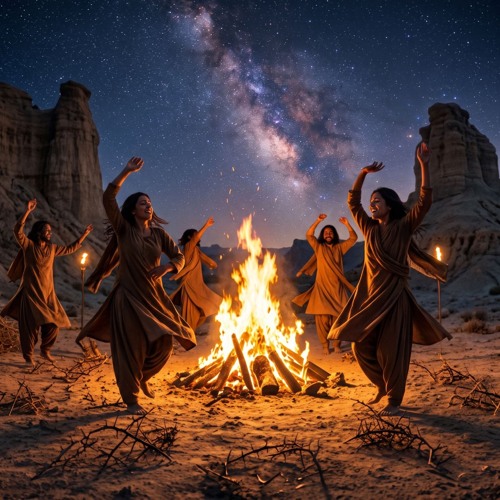
💡 Meaning & story
Composed by Mohammad Farooq
Written by Shakeel Badayuni 1916 – 1970
This ghazal is a magnificent philosophy of embracing life's bitterness with a smile and rejecting conventional comforts to live a vibrant, fearless, and passionate life. In this poetry, the poet urges us to dance (live) joyfully on thorns and the sparks of hell (hardships) rather than merely among flowers and springs (comforts).
The Central Theme and Philosophy of the Poetry
• Rebellion against stagnation: The poet rejects the "stagnation" of paradise (stillness, laziness, and inaction) and speaks of living amidst the boundless sparks of hell (movement, warmth, heat, and struggle). This is actually a lesson in preferring arduous struggle over inactive peace.
• Smiling through adversity: Instead of merely chasing happiness in the world (the garden of existence), it advises dancing ecstatically even on thorns (hardships).
• The ecstasy of love and madness: It speaks of abandoning worldly intellect and the fear of a weak heart to adopt the path of madness, where the established worldly laws (the order of the universe) are mocked, and one's own spring is created even in a desolated garden.
Detailed Explanation of the Verses (for the audience)
• The first two verses: O human! Merely living in easy and pleasant circumstances is no achievement. The true achievement is that you do not let the dance of your feet (courage) stop, even amidst the thorns and the most difficult conditions of this universe.
• The third and fourth verses: The morning candle, the magic of a smile, and the life of a flower are very brief. Learn a lesson from these fleeting scenes of nature, and without caring for the pre-established laws of the universe, inhabit your own world yourself.
• The fifth and sixth verses: Do not listen to the voice of your frightened and weak heart within, but move forward under the guidance of your passions and love. Stop caring about those who are dead while still alive (meaning those whose warmth of life has vanished) and remain absorbed in your own ecstasy.
• The final three verses: Here, human greatness and selfhood reach their peak. The poet says that your reality is not merely this earth, but your station is the sky; therefore, place your steps upon the stars. Drench your every action in the depths of your soul and live life in such a way that you become an 'influence' personified, and when anyone looks up, they see only your glory and your perfection.