 Lyrics & Meaning
💡 Meaning & story
This ghazal by Ahmed Faraz is one of the finest masterpieces of Urdu literature. In this ghazal, the poet has expressed human psychology, the world's indifference, the pain inflicted by loved ones, and life's bitter truths with extraordinary beauty and compassion.
Here, a complete and detailed explanation of each couplet of this ghazal is being presented:
The Opening Couplet (First Verse)
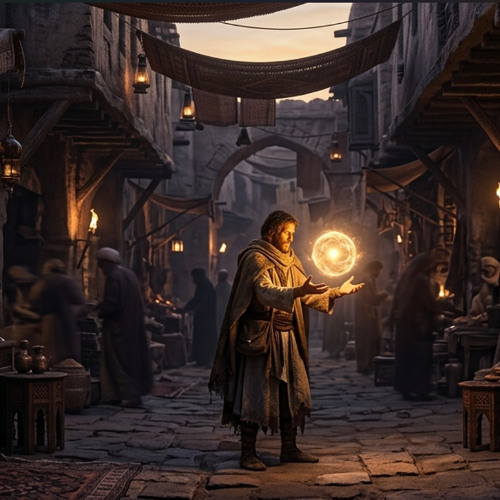
Thinking that buyers of sorrow had arrived, we came to the marketplace to sell our dreams
Explanation: In this couplet, the poet speaks of the world's indifference and his own simplicity. He says that we thought there existed in this world people who would share our pain and suffering, who would understand our feelings, and who would value our dreams. In this delusion, we came before the world (to the marketplace) with our precious dreams, emotions, and hopes, thinking perhaps someone would make them their own. But in reality, the world cares nothing for anyone's dreams or sorrows.
The Second Couplet
We were not Joseph, yet we came to the marketplace; such were our delusions that we thought buyers had arrived
Explanation: This couplet is based on a historical allusion (the story of Prophet Joseph). Prophet Joseph was sold in the marketplace of Egypt because of his extraordinary beauty, and he had countless buyers. The poet humbly says that we did not possess Joseph's beauty, excellence, or charm, yet still we stood in the world's marketplace with ourselves. This was our greatest delusion—that perhaps we too would have some worth and value in this world, and someone would claim us as their own.
The Third Couplet
Now courage has left my heart, strength has left my arms; now that my beloved stands as my opponent
Explanation: This is an extremely painful couplet in which the poet speaks of the suffering inflicted by loved ones. He says that after struggling through life's difficulties, I no longer have any courage left, nor any strength in my body to fight. And the cruel irony is that at this very moment, when I am completely broken, my own friends and dear ones have become my adversaries. I could have fought strangers, but I do not have the strength to fight my own.
The Fourth Couplet
Life called out and hid every time; we were so simple-hearted that we came back every time
Explanation: In this couplet, the reality and mirage of life are described. The poet says that life deceived us repeatedly. Whenever life offered us hope or dangled the bait of happiness, in our simplicity and innocence we completely believed it. But every time that hope proved false, that happiness turned out to be a deception, and life called out to us and disappeared, just as someone might call someone and vanish.
The Fifth Couplet
We were the rebellious lamp; whenever the wind blew, leaving the shelves, we came to the top of the wall
Explanation: 'Rebellious' means defiant, stubborn, or of a different nature. This couplet is an excellent metaphor for courage, bravery, and standing firm against circumstances. The poet compares himself to a rebellious lamp that, instead of hiding in a niche to escape the storms, came to the top of the wall to face them whenever strong winds (opposition or difficult times) blew. That is, we faced difficult circumstances openly and courageously, not like cowards who hide.
The Closing Couplet (Final Verse)
Those who took pride in the light of the sun, O Faraz, they too came to rest in the shadow of a wall
Explanation: In the final couplet of the ghazal, Ahmed Faraz speaks of the world's impermanence and the power of time. He says that those people who were so proud and arrogant of their glory, power, beauty, or wealth (likened to the light of the sun) were ultimately brought low by time. In the end, they too, having lost all their sparkle and shine, one day came to seek shelter in the shadow of a wall (either to beg for refuge or in death's darkness). This couplet reminds us that the world's glory and power are not eternal things.