 Lyrics & Meaning
💡 Meaning & story
The Easy Meaning of the Poem - N.M. Rashed
The fundamental theme of this poem is the breaking of dreams, time's merciless transformation, and how the new generation (flowers) becomes indifferent to the feelings and sacrifices of the old generation (buds). We can understand it by dividing it into three sections:
1. The Night's Tranquility and the Buds' Hopes (First Section)
The poem begins with the atmosphere of night. When there was no commotion or spectacle in the garden during the night, the buds (which had not yet fully opened and were dreaming) were hopeful. They wished to remain in this state for a long time ("la saal" meaning countless years), because in the darkness of night they had beautiful dreams and hope for their fulfillment. Unaware of what was to come, they were content in their own existence.
2. The Arrival of Morning and Reality's Scalpel (Second Section)
As soon as morning comes, that illusion or magical spell of the buds shatters. Here Rashed has compared morning not to traditional beauty but to a "surgeon's" scalpel. Morning's light brings no joy to the buds; instead, it tears open their existence (forces them to become flowers). The buds now fear morning because they know this change in time will end their innocence and their dream of a long life, and they will take the form of "fresh flowers" with melting bodies, but internally wounded and sorrowful.
3. Cosmic Creation Metaphors and the Flowers' Arrogance (Third Section)
Here the poet offers some very beautiful and unique examples of how great truths are born from small or obscure things in the universe:
- As if stars emerged from a forgotten laugh
- As if a flood of stories came from a single grape seed
- As if rivers awakened from an act of kissing (love)
The buds hoped that the flowers born from them would be just like them. They would carry forward their colors, their dreams, and their thoughts, and would fulfill the promise of their sacrifices. But reality proved otherwise. When the buds became flowers, those flowers fell prey to their own illusions and arrogance. They forgot their past (the state of the buds and their painful cries) and instead of sympathizing with their suffering, they laugh at it.
Central Idea (Summary)
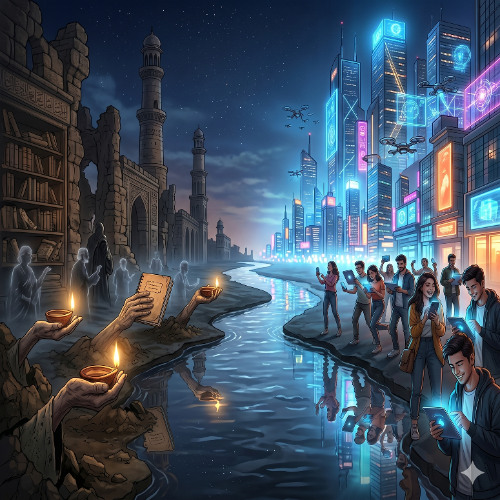
This poem is actually an elegy for time's tyranny and the distance between two generations (Generation Gap). The buds are those who dream for the future, make sacrifices, and wish to build an ideal world. The flowers are the new generation or new condition that emerges, but they forget these sacrifices of the past, become lost in the arrogance of their material existence, and mock the old generation's dreams.
==========================================
N.M. Rashed: "There Were Dreams in the Night" (Verse by Verse Explanation)
Stanza 1:
There were dreams in the night
when no smile remained on the garden's lips
when the garden's eyes held no discourse of spectacle
the buds began to say
we must stay in the garden
for countless years still
Meaning: The poet says that in this dark night of the past, when there was no smile on the garden's lips and there was no worldly glitter or talk of spectacle, still the buds (innocent feelings and dreamers) had their beautiful dreams and hopes. They were so absorbed in this peaceful state that they wished to remain as buds, rather than becoming flowers and appearing before the world, for "countless years."
Stanza 2:
When morning came, the spell
of countless years and the enigma's magic broke
now the buds fear the name of morning
they fear greatly the morning's hand
with the surgeon's scalpel
Meaning: But as soon as time changed and morning came, that magical spell of remaining a bud for countless years shattered. Now the buds are terrified of this new light of morning, because it brings them no joy, but comes like a "surgeon" with a sharp scalpel in his hand, who will cut their existence and force them to transform. This is a metaphor for time's cruelty.
Stanza 3:
What was a single bright moment
in the brevity of the buds' moon and years
is now in their melting bodies
in the guise of fresh flowers
wounded by what wounds
tormented and distressed
Meaning: That bright moment of dreams in the brief life of the buds has now become part of their transformed existence under time's tyranny. Those buds who have now been forced into the form of "fresh flowers," are profoundly wounded and distressed within, because their innocence has been stripped away.
Stanza 4:
There were dreams in the night
and the fulfillment of dreams too
the buds fear greatly the morning
Meaning: The poet repeats that in this former state (night) there were not only beautiful dreams but also the certainty of their completion. That is why the buds now fear this new reality and new era (morning) where dreams die.
Stanza 5:
The buds were happy that these flowers
would bear their very image and features
carry their color, their longing, their wings and feathers
in the secrecy of their own silent smile
Meaning: From here begins the mention of the next generation. The buds (old generation) were happy and confident that these new flowers (new generation) emerging from them would be exactly like them. These flowers' color, their flight (wings and feathers), and their desires would be the same as those of their ancestors, and these flowers would understand the depth of their silent smiles.
Stanza 6 (Cosmic Metaphors):
They knew not how these emerged from the sea empty
as if all these rocks rose from a single broken tooth
as if all the stars emerged from a forgotten laugh
as if a flood of stories rose from a single grape seed
as if rivers awakened from the touch of a kiss
and from a cry of pain humans spread
Meaning: In this long stanza, the poet offers astonishing cosmic examples of which the buds had no idea—how this world and its workings emerged from such a strange sea. Just as seemingly ordinary or small things give birth to great truths of the universe—a laugh becoming stars, a grape seed becoming a flood of stories, or love's touch making rivers awaken, and humanity spreading from a cry of pain. The buds, too, were unaware of these deep cosmic principles; they simply harbored hopes.
Stanza 7 (The Final Section):
They, those buds, had hope
that these flowers too, like them
would be born from the pursuit of their self-knowledge
would be the fulfillment of that sacred promise
Meaning: The buds were certain and hopeful that this new generation (flowers) coming forth would be the reward for their thoughts, their understanding, and their sacrifices, and would fulfill the sacred promise that nature made to them—that the new generation would honor the old generation's legacy.
Stanza 8 (The Conclusion):
The flowers, which are nothing but the arrogance of their own illusions
hearing the sorrowful cries of these buds
they laugh
Meaning: But in the end, everything reversed. When those flowers fully bloomed, they became trapped in the pride of their material existence, beauty, and power. They have been severed from their own past and roots. Now when they hear the painful voices and advice of those buds (their own ancestors or the old generation), instead of understanding their suffering, they mock it and laugh.