 Lyrics & Meaning
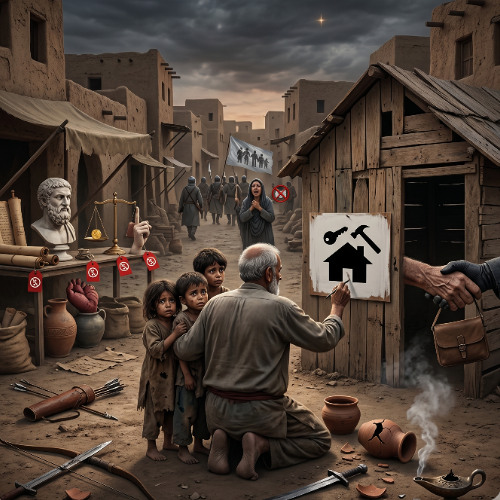
💡 Meaning & story
Reimagined & composed by Mohammad Farooq
Materialism and Indifference (Central Theme)
The poem begins with this despair: that in the world today, nothing remains that is not for sale. When a man is forced to sell his roof (home) upon seeing his children weep from hunger, this is the pinnacle of society's economic ruin and callousness.
Sincerity and the Trade of Tales: The poet says that where the value of emotions should have been, now only greed and avarice reign. People's sorrows and their stories too have become part of commerce.
The Auction of Knowledge and Truth (The Socrates of Time)
One deep aspect of the poem is its critique of the wise and the judges.
The Socrates of Time: When the greatest scholar or philosopher of the age stands ready to be sold in the marketplace, it means the voice of truth has been purchased.
Justice and Fairness: Those who sat on the throne of justice until yesterday (the judges) now price themselves today. This hints at the decline of the judicial system.
Helplessness and Exhaustion (The End of Rebellion)
The poet says there comes a time when man grows weary fighting circumstance. "Arrows, swords and spears" (weapons) being sold means there is no strength left to fight, and the rebel has laid down arms and made peace.
National and Global Tragedy (Palestine and Abel's Blood)
The poem speaks not only of individual suffering but also of collective sorrow:
Palestine: The poet laments the callousness of the Muslim nation—on one side the oppressed await help, on the other the protectors (armies and caravans) remain silent or are already sold for their interests.
Historical Reference: By mentioning Abel's blood and soil, it is shown that the very land founded on sacrifice has today been offered up for profit.
Joseph of Canaan and the Tyranny of Fate
By invoking Prophet Joseph, the poet makes clear this point: sometimes circumstances are so cruel that even a precious being like Joseph is sold as a slave in the markets of Egypt. This is a historical example of the trampling of human values.
________________________________________
Summary and Purpose (Message)
The purpose of this poem is to shake people and say:
We live in an age where "the voice of conscience" carries a price.
Man, caught between his needs (his children's hunger) and his desires, has lost his very identity.
Sacred things like loyalty, sincerity, knowledge and justice have become mere commodities.
Conclusion: This poem is a mirror for society, showing us that if we do not stop this race toward materialism, humanity's very "nest" will be completely auctioned away.