 Lyrics & Meaning
💡 Meaning & story
Hafiz Jalandhari's poem "Yearning for Leisure" reflects an eternal tragedy of human existence: the scarcity of time and the burden of economic hardship. Hafiz Jalandhari is renowned for his patriotism and epic poetry (Shahnamah-e-Islam), yet in this poem he is expressing the heartbeat of an ordinary person and their daily struggles.
You can explain this for your audience in light of the following points:
1. The Central Theme (The Core Theme)
The central idea of this poem is "contradiction." On one hand, man possesses refined taste, yearning for beauty and the desire to create something grand, and on the other hand, the chains of "economic concerns" (worries of livelihood). The poet is saying that man is like a small leaf in the river of time, forced to drift when he wishes to rest, but the current carries him away.
2. Stanza-by-Stanza Explanation (Detailed Explanation)
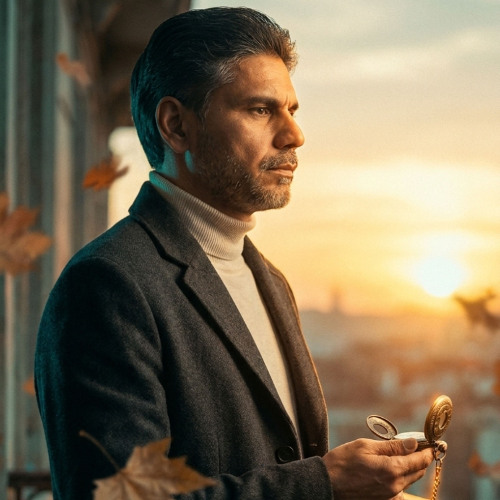
• The Cruelty of Time: The poet says life is like a leaf at the mercy of the waves. He wishes to pause for a moment seeing the beautiful shade of trees on the shore (reflection of foliage) and observe nature, but the flow of life grants him no respite.
• Creative Longing: Through "Let me acquire some craft, from gardens of themes," the poet expresses his desire to write poetry, create art, or do something that will be remembered through the ages, yet he never finds the "leisure" to do so.
• The Burden of Economics (The Financial Struggle): Here comes the most crucial turn in the poem. The poet admits that "economic concerns"—earning money and sustaining the household—do not allow him freedom. This is the sorrow of every person in every age: they must sacrifice their passions to fill their bellies.
• A Strange Circle (The Paradox): The poem concludes on a profound note. The poet wonders if he were to undertake some great work or earn wealth so that he might find peace, he realizes that even thinking of this "great work" requires the peace and leisure he does not possess. It becomes an endless loop.
________________________________________
3. Why Was This Poem Written? (The Reason)
Hafiz Jalandhari wrote this poem during a time when the subcontinent was entering an industrial age and material progress, and man was becoming a machine. The reasons for its composition could be:
1. Expression of Human Helplessness: He wanted to show that no matter how intelligent man is, material necessities make him a prisoner.
2. The Artist's Tragedy: An artist (poet or writer) always feels that time is scarce and there is much to say. This poem is the result of that inner restlessness.
3. The Search for Balance: This poem compels us to think: were we created only to work, or is it also our right to experience the beauty of life (the fragrance of flowers and the reflection of trees)?
4. A Message for the Audience
This poem is not only Hafiz Jalandhari's story but ours as well. In today's digital age, when we are constantly occupied with work, this poem reminds us that our soul also needs "leisure" so that it may fill its fold with "gardens of beautiful thoughts."
This poem is an excellent example of "free verse" poetry, wherein even without the constraint of rhyme and refrain, a magical flow exists.