 Lyrics & Meaning
💡 Meaning & story
Words of Ahmad Nadeem Qasmi (Female Version)
Background: This beautiful ghazal is the creation of Ahmad Nadeem Qasmi, an esteemed poet of Urdu literature. The original composition was written in the masculine form (for example: "I shall die," "I shall descend"). Here it has been rendered in the feminine voice, which presents Qasmi's universal message in a new and more impactful manner.
Section-wise Explanation
1. The Opening Couplet
Who says that when death comes I shall die? I am a river—I shall merge into the ocean. In this verse, Ahmad Nadeem Qasmi expresses the philosophy of human greatness and eternal life. The poetess says that death cannot end me. Just as a river merges into the ocean without losing its essence, but rather gains vastness and becomes the ocean itself, my soul too shall become part of the eternal truth of the universe.
2. The Second Verse
Leaving your threshold, where else shall I go? I shall dwell in homes, I shall scatter in deserts. This verse expresses that attachment where destination and journey are bound to only one being. If I step outside the confines of your memory, no existence of mine shall remain; either I shall shrink into myself or become dust scattered in the desert.
3. The Third Verse
When I rise from your side, this is the difficulty—I shall find only one person wherever I go. This reflects love's ultimate state where the eye searches for only one face. The poetess says that even after distance from your presence, in the crowd of the world my eyes shall see only your reflection.
4. The Fourth Verse
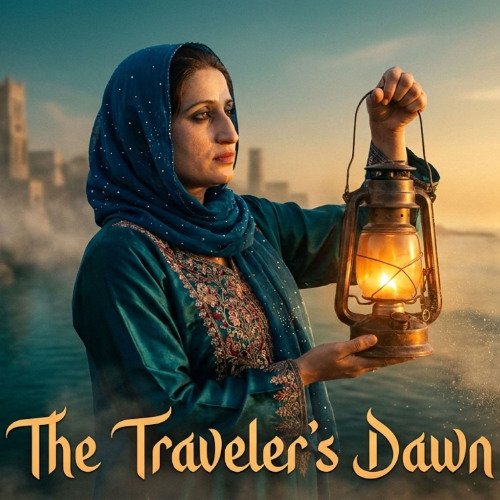
Now I shall come to your city like a traveler, I shall pass like the shadow of a cloud. In this verse Ahmad Nadeem Qasmi describes the dignity after separation. Now I shall come to your city not with any claim, but like a foreign traveler, and pass silently like a cloud's shadow—no sound, no knock.
5. The Fifth Verse
Your pledge of faithfulness has become the wall of my path, otherwise I had thought that whenever I wished I would die. Here the compulsion of faithfulness is mentioned. The poetess says that the vow I made to remain with you does not let me die. In life's difficulties, death was an easy way out, but keeping faith with you proved more necessary than living itself.
6. The Sixth Verse
My measure is different from those who seek remedies—when I bear wounds, I shall only become more refined. This verse by Qasmi is the pinnacle of courage. He says that ordinary people break under sorrow, but my capacity is different. The more wounds I shall bear, the more grace and maturity shall enter my being. Every shock shall polish me and give me a new form.
7. The Seventh Verse
Now let centuries pass as the sun has passed—now I shall search for it until dawn breaks. This verse is a metaphor for the quest of hope. For the long darkness or despair that has settled in life, I have made a firm resolve that I shall keep searching for that joy's 'sunlight' until dawn comes.
8. The Refrain
I shall burn like the candle of life—let me be extinguished, yet I shall bring the dawn. This is the conclusion of the ghazal. The poetess entrusts her life to a candle that melts itself so it can give light to others. She says that though I may perish, my struggle and my words shall be a lamp in the darkness for those to come.